

The alternative system of medicine known as homeopathy, was founded by Samuel Hahnemann (1755-1843) more than 200 years ago and was based on several theories, two of which include: “like cures like,” (the notion that disease can be cured by a substance that produces similar symptoms in healthy persons); and the “law of minimum dose” (the notion that the lower the dose, the greater its effectiveness). Although critics argue its effects are largely due to placebo, therapeutic context, or natural healing, not the remedies themselves, an estimated 200 million people practice homeopathy worldwide, including 5 million adults and 1 million children in the United States. In the history of homeopathy, the American form of homeopathy is unique.
Dr. John Haller, emeritus professor of medical humanities and the history of ideas, has authored more than thirty books on subjects ranging from race and sexuality, to medicine, pharmacy, biography, religion, spirituality, war, and philosophy. He is a former editor of Caduceus and served as vice president for academic affairs for twenty years at Southern Illinois University. His most recent books include Fictions of Certitude: Science Faith, and the Search for Meaning, 1840-1920; Swedenborgs’Principles of Usefulness: Social Reform Thought from the Enlightenment to American Pragmatism; Michael A. Musmanno: Lawyer, Legislator, Judge, and Showman; and Religion after the Gods: Edwin H. Wilson and the American Humanist Association (forthcoming).
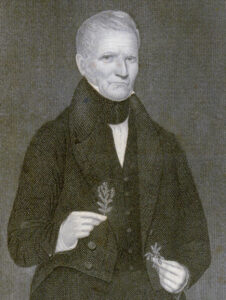 Founded by Samuel Thomson (1769-1843), this 19th-century system of alternative medicine was based on herbal treatments designed to regulate the body’s heat through a six-step process of healing. Thomson began his practice as an itinerant healer in 1805, and with the help of hundreds of agents and Friendly Botanic Societies, he sold “rights” to his patented medical system that, by 1830, claimed an estimated 2 million American users. Thomson’s significance lies less with his theory of healing than with his innovative business techniques which presaged several 20th-century practices.
 Eclectic medicine represents an alternative branch of an American healing system that had its beginnings with the opening of the U.S. Infirmary in 1827 in New York City. Decrying the excessive use of bleeding and heroic drugs, its founder, Wooster Beach (1794-1868), prescribed botanical medicines based on the principle that physicians should employ whatever was found to be beneficial to their patients. This practice went against the prevailing medical systems of both orthodox and unorthodox medicine, which depended almost entirely on humoral pathology, or the theory of temperaments. Eclecticism’s intellectual center was the Eclectic Medical Institute in Cincinnati, whose 97-year history offers a unique insight into this interesting healing system.