From 7:00 p.m. until 8:00 p.m.
At Virtual Program
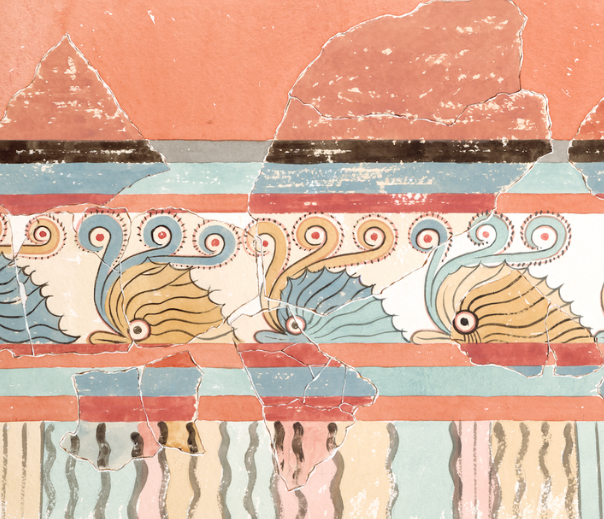
Explore depictions of marine life in the art of Late Bronze Age Greece (ca. 1600–1100 BC)! Amid a survey of sea creatures found in these works, including octopods, dolphins, and fish, special attention is given to the enigmatic argonaut motif and its appearance on wall paintings of the Mycenaean ‘Palace of Nestor’ at Pylos. While the focus is divided between the motif’s various meanings, its painted depictions offer exciting insight into the thought processes and working methods of Greek Bronze Age artists.
Watch the recording on YouTube.
 Emily Catherine Egan is Assistant Professor of Ancient Eastern Mediterranean Art and Archaeology in the Department of Art History & Archaeology at the University of Maryland. She holds a dual B.A. from Brown University in Classics and Old World Archaeology and Art, an M.Phil. in Archaeology from the University of Cambridge, and an M.A. and Ph.D. from the Department of Classics at the University of Cincinnati. She has conducted archaeological fieldwork in Italy, Turkey, Cyprus, Jordan, Armenia, and Greece, where she is currently involved in projects at the sites of Mycenae and Pylos. Her research focuses on painted surface decoration, and especially on the iconography of Greek wall and floor paintings from the late second millennium BC.
Category